The Justice Select Committee’s inquiry into young adult offenders
Clinks has submitted evidence to the Justice Select Committee’s inquiry into young adult offenders.
Working with young adults in contact with the criminal justice system - A review of the evidence
Gemma Buckland from the Transition to Adulthood Alliance, looks at the body of evidence on the maturation process and best practice in working with young adults.
Best practice in working with people with mental health problems on probation
Professor Charlie Brooker and Dr Coral Sirdifield take an in-depth look at the barriers faced by people on probation suffering from mental health problems and what good quality care for this group looks like.
Procedural justice in the courts
Dr Amy Kirby and Professor Jessica Jacobson examine the evidence base for procedural justice in the courts. They consider
the emerging research on procedural justice in the courts and provide examples, drawn from their own empirical studies,
of how procedural justice may be achieved in practice in the courts.
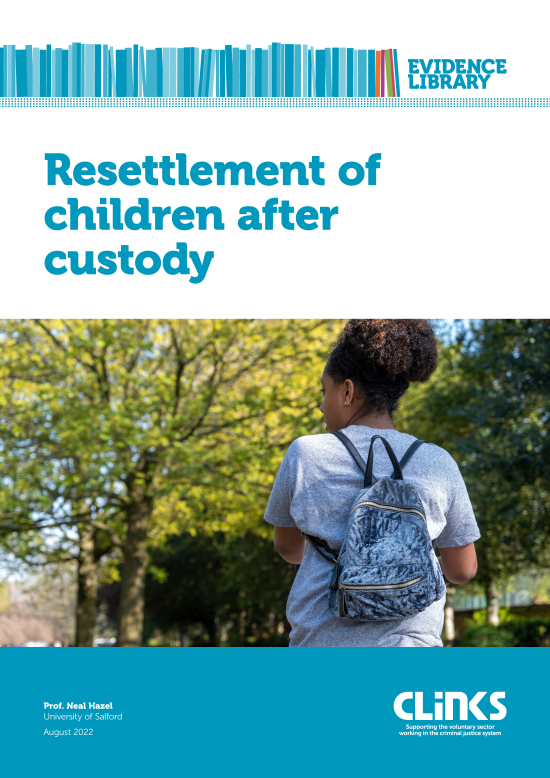
Resettlement of children after custody
Criminologist and social policy analyst Professor Neal Hazel, looks at the considerable body of evidence regarding effective resettlement support for children being released from custody. It shares policy and practice guidance as well as how to implement it effectively.
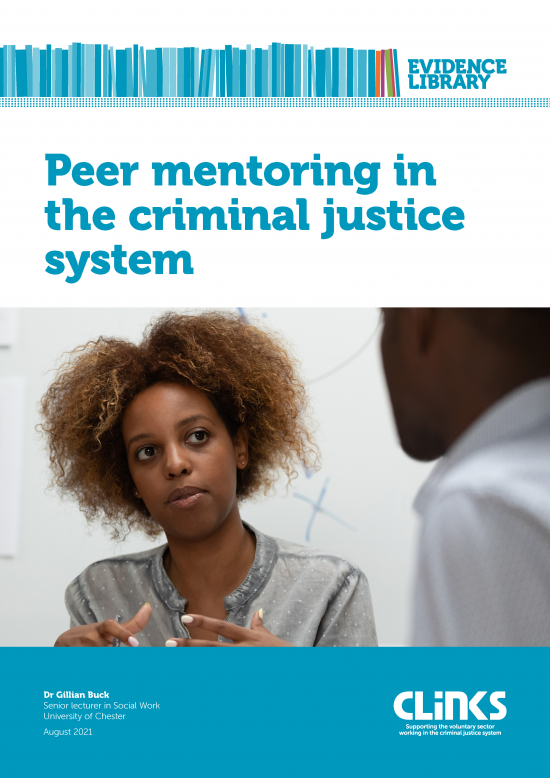
Peer mentoring in the criminal justice system
This evidence review by Dr. Gill Buck, Senior Lecturer in Social Work at the University of Chester, assesses the current evidence base of peer mentoring in the criminal justice system – to which she is an important contributor.