Getting creative with knowledge exchange in civil society
"I was really pleased to be part of a workshop that created the space for academia and civil society to come together, not just to talk about the gap between us, but to explore what it takes to actually bridge it. Creative approaches can help us see things differently and explore questions in ways we might not otherwise consider.” (Mandy Mahil, Chair of Clinks)
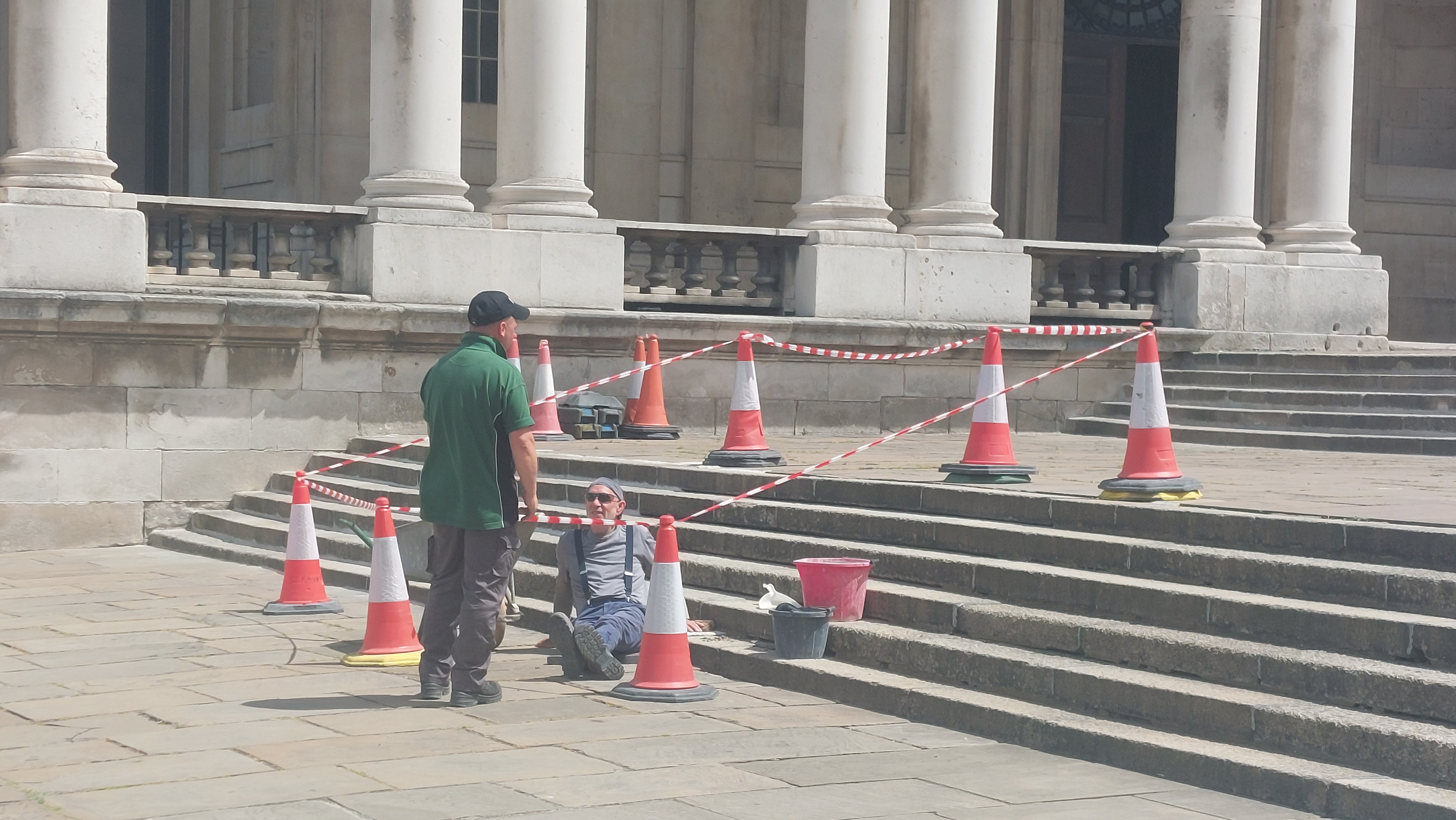
On 29 June, sweltering in the summer heatwave, a crowd of people from academia and civil society meandered across the lawns and into the buildings of Greenwich University campus, mobile phone cameras in hand. They had been tasked to take photos that represented ‘not useful’ research and evaluation:
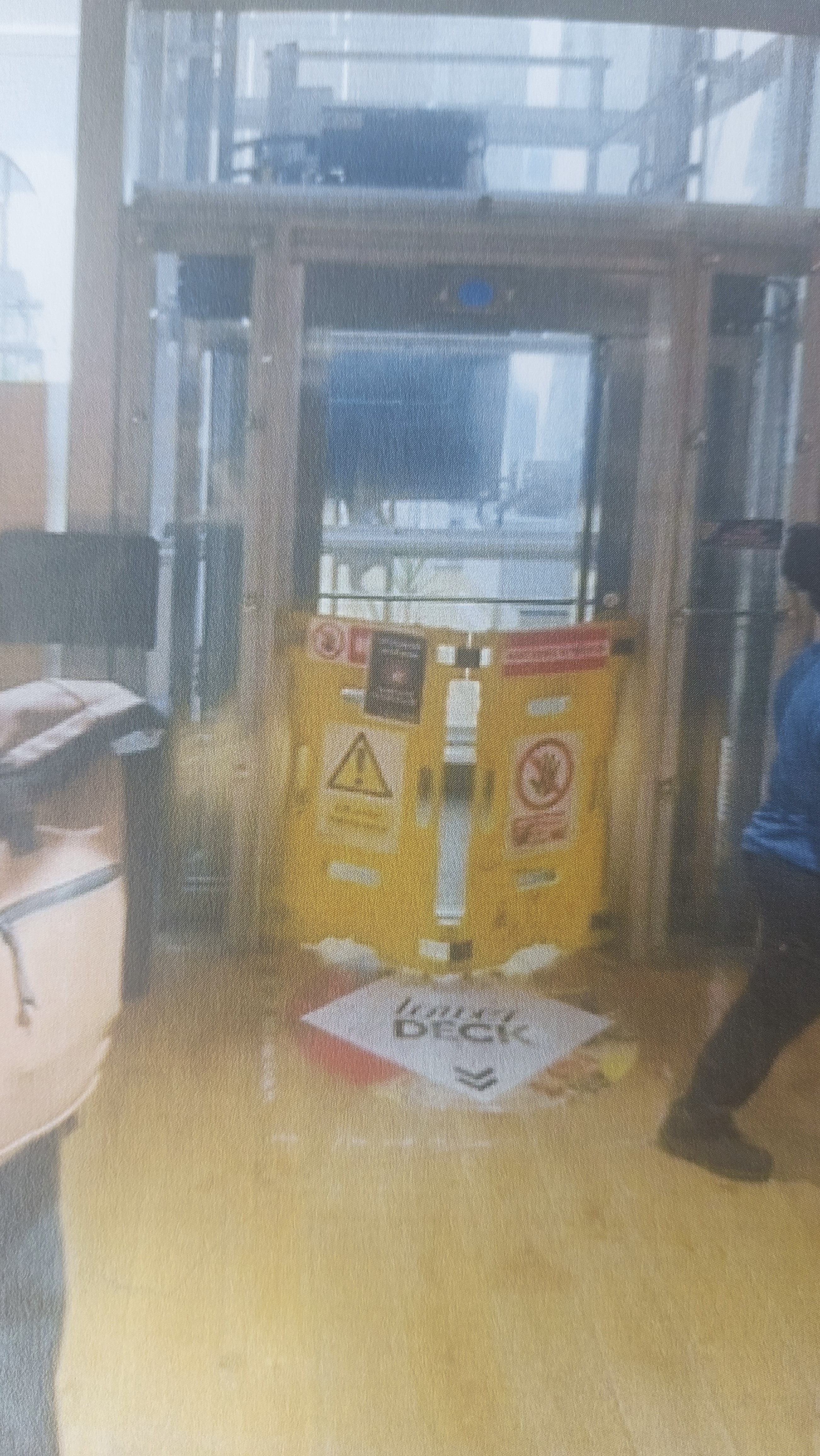
“It’s like a lift that is not working. You can’t get access”.
“It’s like a closed door. You can’t get in.”
“It’s like hazard tape. It’s intimidating, and you don’t know if you can go in or not.”
“It’s like finding rubbish on the floor, but no bin to put it in. You can’t solve the problem.”

|
|
|
Their images illustrated that ‘not useful’ research felt inaccessible and didn’t help to solve their problems. However, the ‘useful’ research and evaluation photos they took told a different story:
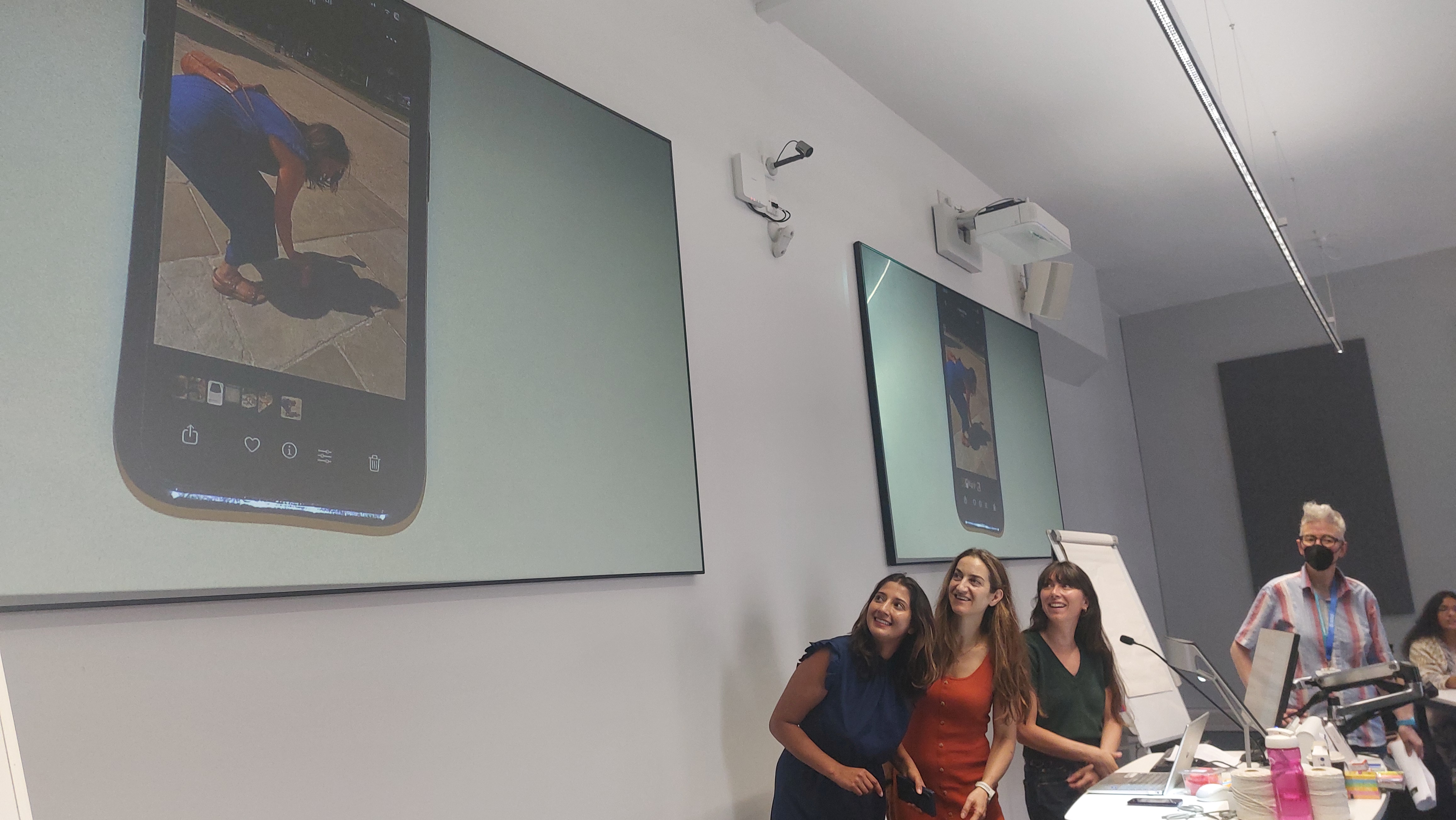
“It’s like taking a photo of a full scene, and then one zoomed in. It allows you to see different perspectives and angles. It helps you explore the detail, but also the bigger picture .”
“It’s like picking up litter. You see a problem more clearly and can take action to change things for the better.”
“It’s like looking into the shadows to find deeper meanings.”
“It’s like the sun behind the clouds. Helping to find the light.”

|
|

|
From this creative starting point, using a method called PhotoVoice, we started to ‘chart the territory’ of the two worlds of academia and civil society.
As co-convenors of a critical creative methods summer school workshop, Dr. Ella Simpson (a Senior Lecturer in Criminology at Greenwich University) and Nina Champion (a Professional Doctorate researcher in Social and Criminal Justice at Greenwich University), we consider ourselves to have one foot in each world, given our past careers and close links to the charity sector. We were keen to collectively explore what is important to each ‘world’ and the barriers and incentives to working together on ‘useful’ research and evaluation projects.
Charting Territory:
Key themes – and further questions! – that emerged from the discussion:
Credibility is a big incentive for civil society to partner with academia, to help develop the evidence base and build the case for the services, support or advocacy they provide. As one participant said, ‘it can put critical rigour to a gut feeling.’
‘Usefulness’ can mean different things to different people. Research can have both intrinsic value (useful in its own right - contributing to knowledge) and extrinsic value (useful to external parties - contributing to social change).
Whose job is it to focus on the ‘impact’ of the research and how it is disseminated and used by practitioners and others? Getting clarity (and resources) for this is important.
Capacity (or lack of) is a big issue for civil society organisations, who may lack time and resources to engage with research and evaluation. They may also face pressure from funders to adhere to specific timeframes or outputs.
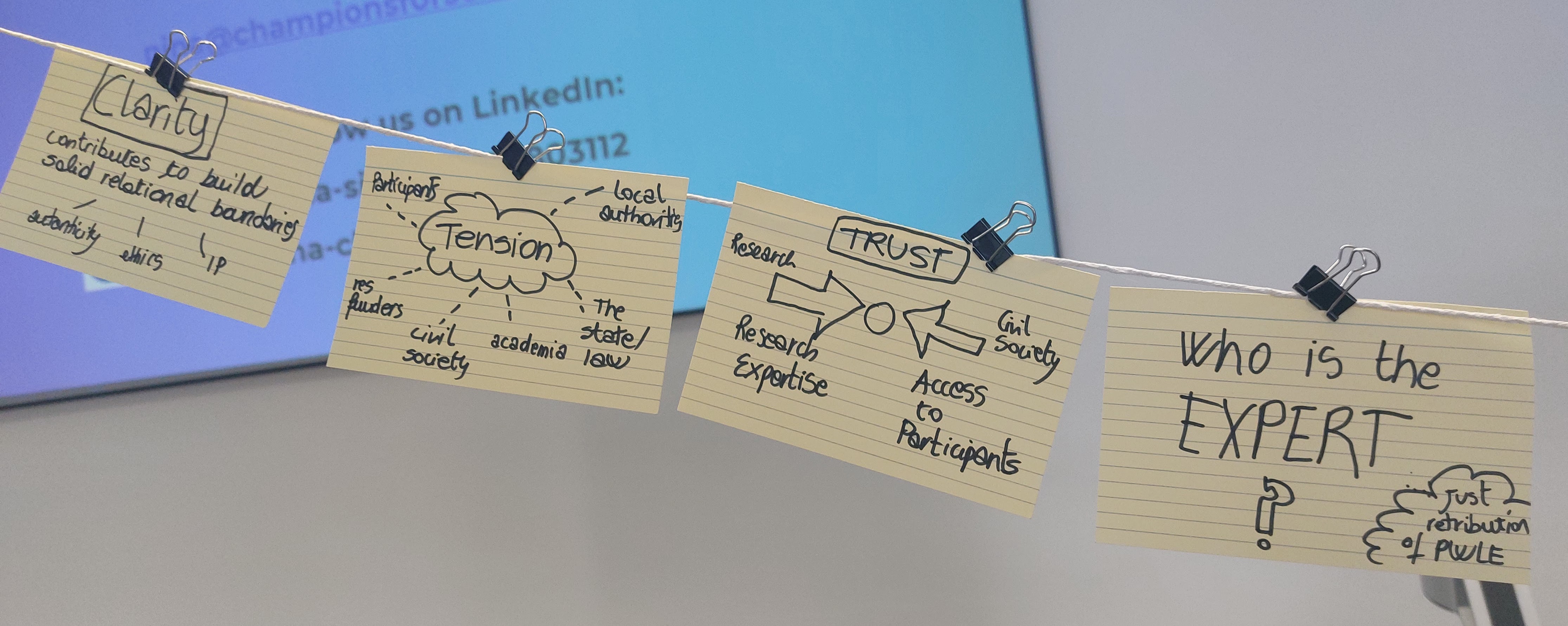
There is a need to think critically about ‘who is the expert?’ and acknowledge different – but equally valuable - forms of knowledge and expertise – lived, learned and professional.
Civil society has access to people with lived experience, but a challenge can be a lack of trust with academia due to power dynamics and a historic lack of knowledge equity.
Barriers included paywalls where research evidence can be inaccessible, lack of attendance at expensive academic conferences by civil society and lack of spaces for academics and civil society to meet, think together and build potential collaborations.
- Other barriers include insufficient funding for research and evaluation; intellectual property concerns and lack of awareness of different research methods – such as critical creative methods and Participatory Action Research.
Learning from a real-life case study
In a bid to offer authentic experience and show learning from mistakes in action, Dr. Ella Simpson offered a brief case study of their recent evaluation project committed to co-producing knowledge with women in prison and civil society organisations. The creative education project, led by Open Book at Goldsmiths in collaboration with Clean Break Theatre Company, almost came unstuck when a misreading of the prison environment by the lead-evaluator created tensions and came close to upending the project. Careful listening and the introduction of creative research methods, to meet with creative practice, saved the day, leading to a successful project and some important findings about the project itself and the difficulties of co-production in prison. As the evaluations’ peer-researcher wrote:
‘Co-production in prison is like building a sandcastle on an open beach, with no idea what the tide is doing.’ (Sol-e-tare)
Yet through concerted efforts on all sides and finding ways to blur the boundaries between academics and practitioners, prison-based and campus-based researchers, women inside and outside the prison, they succeeded in producing knowledge that spoke to everyone.
Bridging Divides:
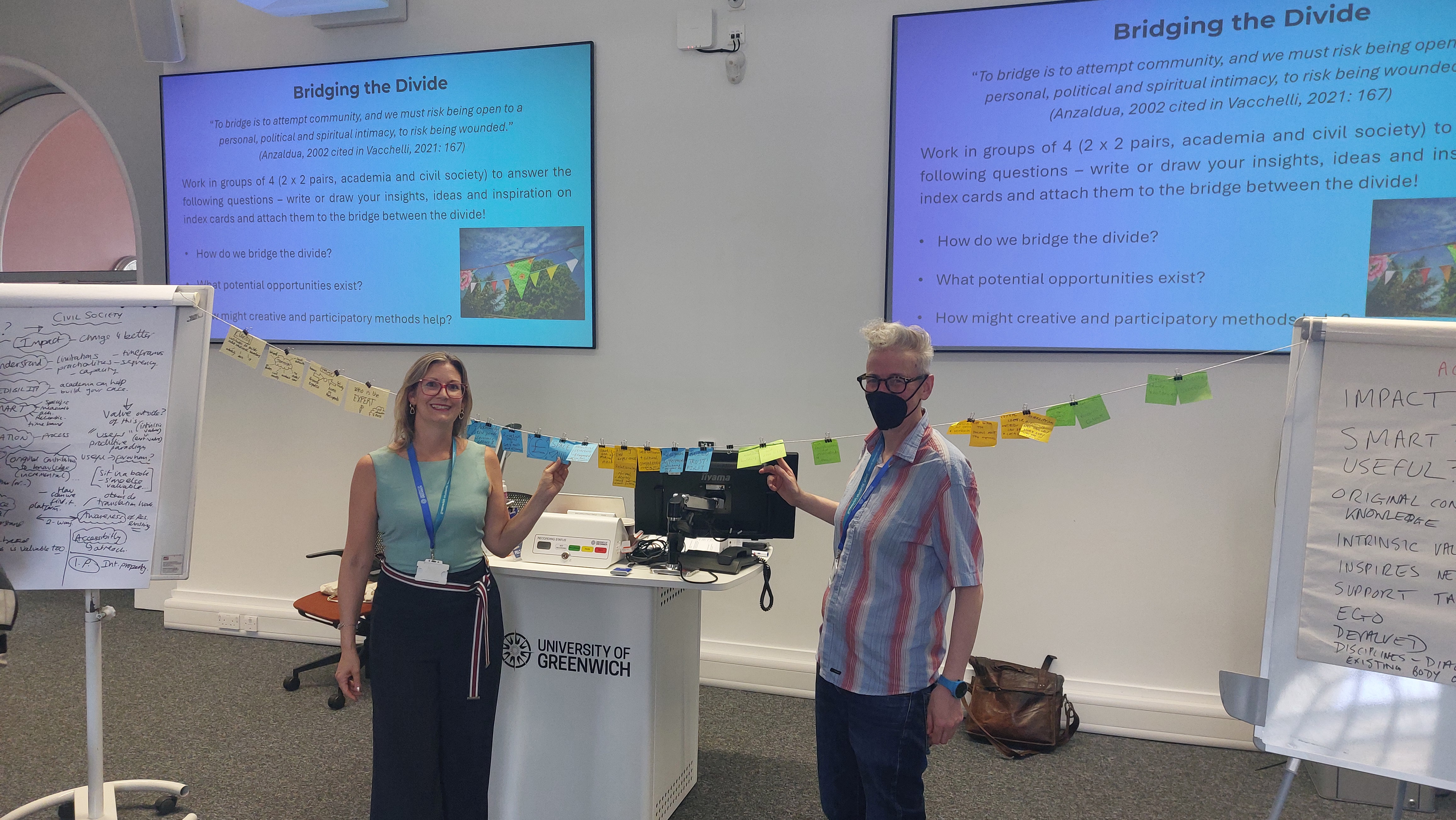
“To bridge is to attempt community, and we must risk being open to a personal, political and spiritual intimacy, to risk being wounded.” (Anzaldua, 2002 cited in Vacchelli, 2021: 167)
|
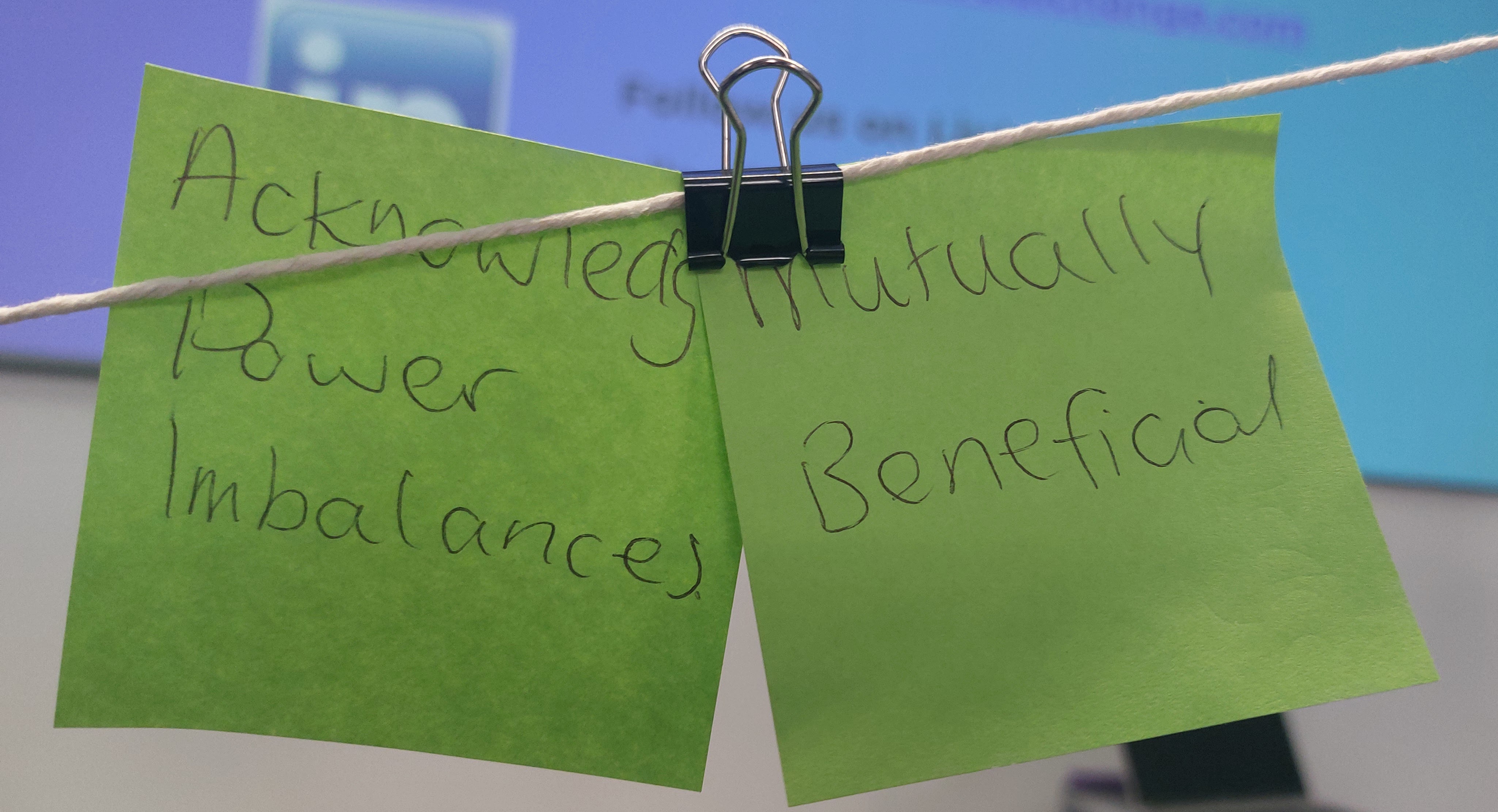
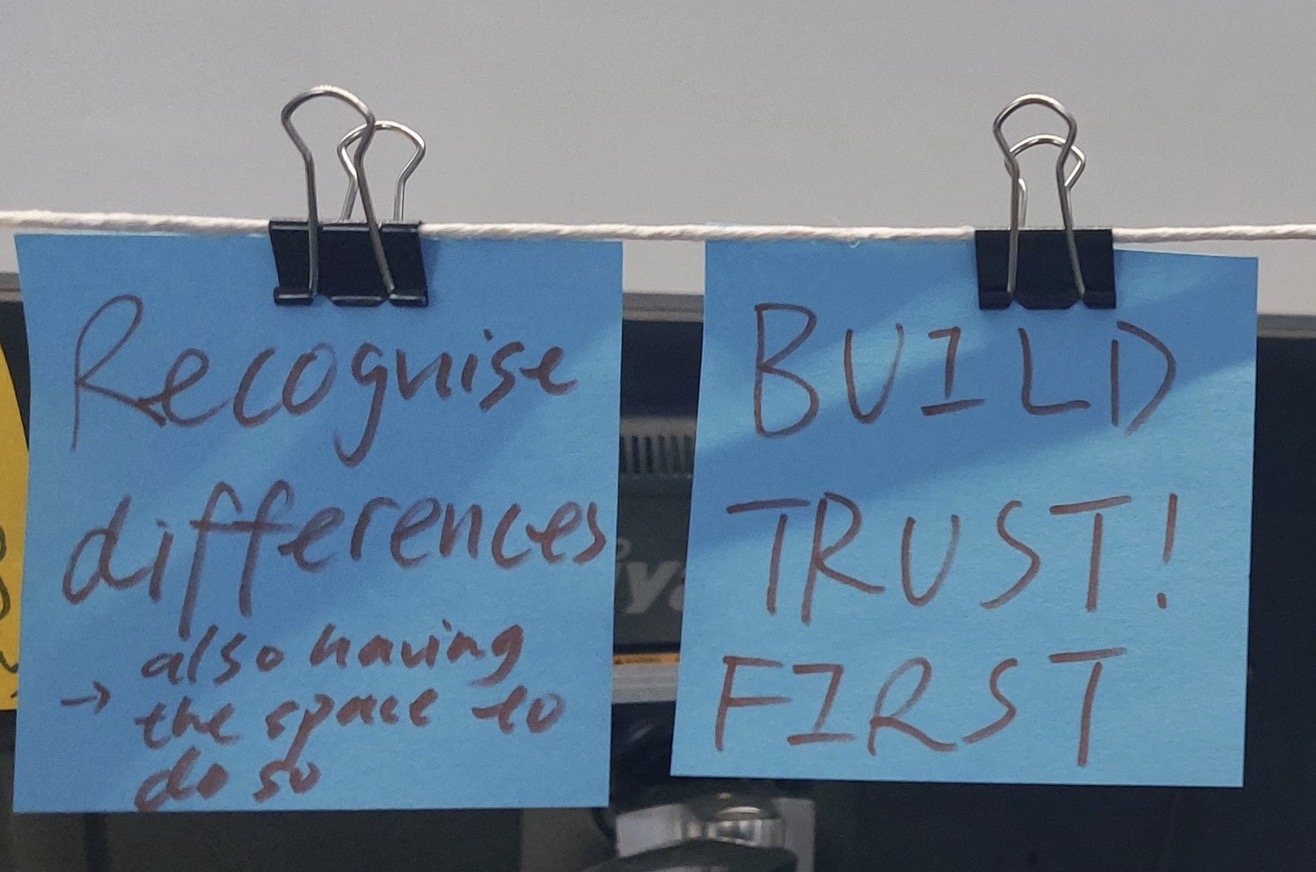
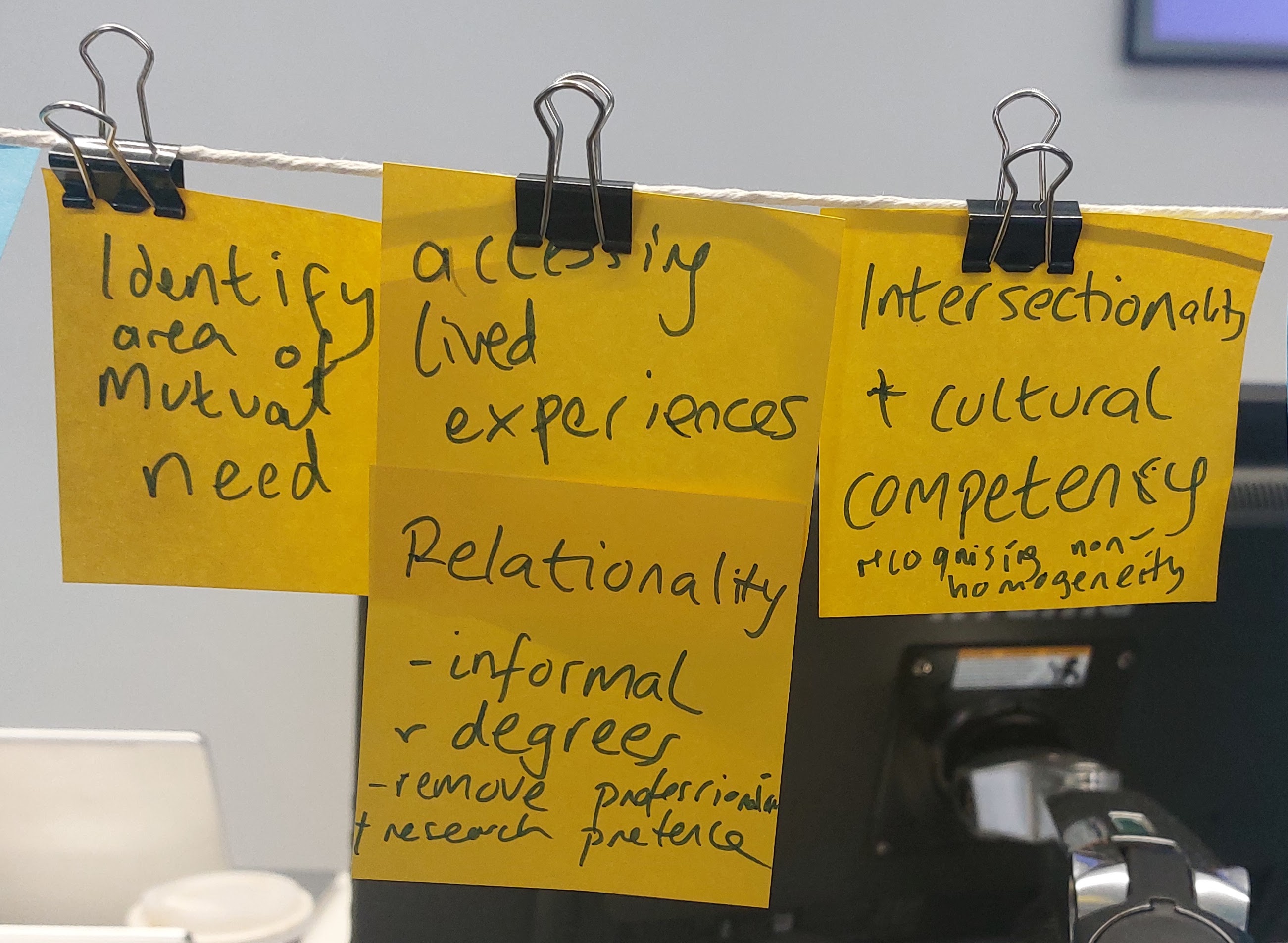
We ended the workshop by building a bridge made of string between the two worlds (flipcharts!) and asking participants to clip Post-it notes with their ideas representing steps that could be taken to ‘bridge the divide’ between academic and civil society. These included:
- Acknowledging and addressing possible tensions and power dynamics
Recognising differences – having the space to do so
Cultural competency - awareness of intersectionality
Having clarity – contributes to building solid relational boundaries
Building trust first
Focusing on relationality
Not being too precious about the method – adaptability and flexibility
Being aware of people’s (lack of) time
Negotiating on research outputs
Diversifying academia – more researchers with lived experience and from civil society
Exploring the use of critical creative methods
Funding that will support different types of research, evaluation and dissemination
Being proactive and strategic, involving academics from the start of a project
- Constantly considering and reconsidering ethics
|
|
|
|
Reflections and Recommendations
We were delighted to provide the catalyst for this important conversation, which has identified barriers and practical solutions to generating ‘useful’ research and evaluation collaborations between civil society and academia.
The key recommendations that emerged about building community were:
Academia and civil society have valuable and complementary lived, learned and professional expertise to share. Take time, find space to come together and listen to each other.
Accept that needs and expectations may be different, but mutual benefits and interests often emerge in dialogue.
Using creative critical methods that help us think differently, together, and can help us see the commonalities and congruences.
- Experimenting, reflecting and learning from mistakes can be as important as ‘succeeding’ – and being open and honest to share the ups and downs of the research and evaluation journey can help others.
Please tell us about your collaboration experiences between civil society and academia, and what you would add to the list!
As Mandy Mahil (Chair of Clinks) reflected:
“We should be much more intentional about creating spaces where we can develop solutions together and start making better use of the knowledge and expertise that already exists around us. I’d like to see much more of this: more bridges, more shared learning and more collaborative approaches to research and evaluation.”
If you want to find out more, here is some suggested reading and resources:
Photovoice: An Introduction to the Method and Analysis Tips — Sage Research Methods Community
Knowledge Equity: a framework for critical reflection - NCRM EPrints Repository
A Manifesto for Co-Producing Knowledge: E4J, Unlock, FACT and University of Chester
Professional Doctorate in Social and Criminal Justice | University of Greenwich, London
Dr. Ella Simpson and Nina Champion
What's new
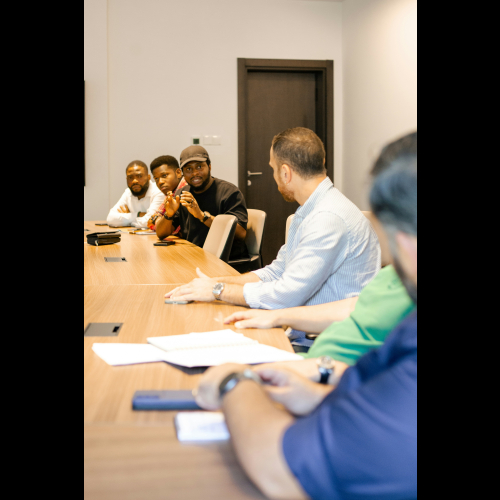
Publications
The Independent Review of the Prison System’s Call for Evidence – Clinks’ Response
This response sets out Clinks’
Latest on X
 Clinks @clinks_tweets · 2 years
The role is for a leader from an organisation focused on racially minoritised people, with expertise in service delivery, policy, advocacy, or related areas in criminal justice. Racial disparities are present at every CJS stage. This role ensures these voices are central in shaping policy to help address and eradicate them. Apply by Mon 18 Nov, 10am. More info: https://www.clinks.org/voluntary-community-sector/vacancies/15566 #CriminalJustice #RR3 #RacialEquity